Many of us believe mismatched desire spells doom for a relationship.
That if you and your partner want sex at different times, in different ways, or at different frequencies – it must mean you’re fundamentally incompatible.
And while it certainly can be difficult to manage, and can end relationships, it doesn’t automatically have to. In fact, as a sex therapist and coach – I’ve seen this firsthand, because I help clients overcome sexual difficulties every day.
It’s often the idea that a difference in sexual desire always means the end that can be far more damaging than the mismatch itself — because once you start believing you’re doomed, you stop looking for ways forward.
You stop talking about it, you stop trying, and you retreat into silence and avoidance. And when that happens, the problem doesn’t just sit there – it creates a chasm between you and your partner. One that grows over time.
Why Mismatched Libidos Feel So Heavy
When one of you wants sex more often than the other, both of you end up hurting.
Saying no can leave you feeling guilty, and frustrated – even though it’s the right thing to do when you definitely don’t want sex.
Being turned on can feel discouraging and lonely when rejection is repeated. It can erode any sense of hope.
Eventually, you both start to draw the same conclusion; maybe something is broken here. Maybe we’re broken and need to end things.
But here’s the thing; you might not be, and neither might your relationship.
Beliefs Matter More Than Numbers
Research shows that our beliefs surrounding sex likely impact our sex lives to a great degree.
Two couples can face the exact same libido discrepancy and still end up in very different places.
For some, the gap feels so discouraging that it seems easier to give up, to stop trying, to assume it will never change. And that reaction makes complete sense – when something feels painful for long enough, protecting yourself by pulling back is a natural response.
We’ve all done it at some point.
For others, the very same situation sparks a different choice: to take a small step forward, even if it feels awkward or uncertain.
And often, that’s the couple who ends up feeling closer, more connected, and eventually having better sex. Not because they wanted it more, or because they were somehow “better” at relationships, but because they allowed for the possibility that mismatched libidos in relationships don’t have to mean the end.
Action Fuels Hope
Hope doesn’t just land in your lap one morning (though that would be lovely, right?) – it’s created. And one of the ways it’s created, is through action – however small.
This could look like having an honest conversation with your partner about your differences. Booking a session with a sex therapist or sex coach or trying an exercise you read about. The point is that these steps matter because we’re sending a signal to ourselves and to our partner, that we’re still in this.
Sexual difficulties are just like any other difficulty in marriage or a long-term relationship. They can be worked through. And if you’ve been together for a while, chances are you’ve already worked through lots of bumps along the road. This difference in sexual desire doesn’t have to be any different.
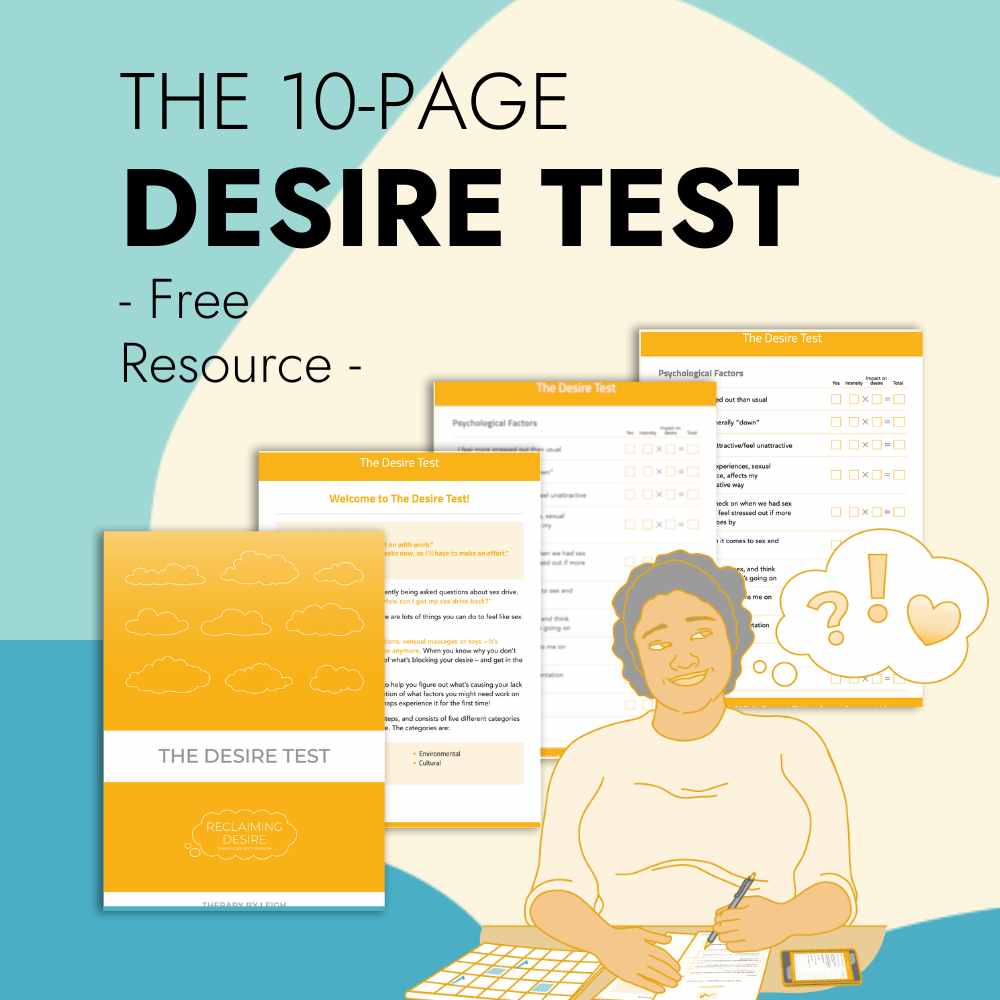
WANT YOUR SEX DRIVE BACK?
My free resource The Desire Test helps you take that first step towards an increased sex drive, by understanding your decreased desire.
Take the 10-page assessment quiz, get the answers you need to understand what’s standing in the way of your desire, and get free sex and relationship tips directly to your inbox. You can unsubscribe at any time.
The Myth Of “Marriage Kills Sex”
Another belief that drains hope is the idea that long-term relationships kill desire.
That once you get married, sex fizzles. That once you have kids, you can kiss intimacy goodbye. That by the time you’ve been together for decades, you’re just roommates.
It’s such a common cultural story that people accept it as fate. But it’s not true.
I’ve worked with couples who’ve been together 5, 15, even 25 years – and at the end they’re having deeply fulfilling sex. Because even though long-term closeness doesn’t fan desire in and of itself – the belief that it will kill it is what makes you stop doing all the things desire needs, to show up.
So What Can You Do Instead?
If mismatched desire doesn’t have to mean the end, then what can actually shift things? In truth? Lots. But here are a few ways to start with:
Stop telling yourself you’re broken. Different levels of sexual desire are normal and to be expected if you’re together for a longer stretch of time. When we know this, it can help us look at the situation differently, and therefore approach it differently, too.
Get curious about what sex means to each of you. For one of you, it might equal connection and closeness. For the other, it might feel like pressure or stress right now. Until you talk about that, and address how and why sex feels different to both of you, it’s going to be difficult to remedy things.
Take small steps instead of big leaps. It’s easy to feel like you have no idea where to start (because likely, it’s complex, as most things in relationships are). Instead of looking at the whole roadmap, pick something and start there.
It could be an opening conversation about how you’ve noticed sex has been difficult lately, or trying out a free exercise to work out what might be going on underneath the surface.
Widen your definition of intimacy. When we’re not having sex, it often becomes the focus. Sometimes, we even stop being intimate in other ways for fear of our partner “getting the wrong idea”. But general physical affection can be just as important as sex, especially if we’re not having it.
Things like, holding hands, sitting close on the sofa. Even just kissing without expectation of it leading anywhere. These are the things that rebuild safety and help when you’re wondering how to handle mismatched libidos.
Ask yourself what you would shift if you truly believed your differences didn’t mean the end. Would you bring the subject up instead of avoiding it? Would you reach for your partner instead of bracing yourself? Would you allow yourself to feel just a little bit of hope?
Because once hope is in the mix, even in the tiniest of doses – everything starts to look different.
You Get To Decide
At the end of the day, mismatched libidos doesn’t have to mean doom, even if feels that way right now. Really, all it’s saying is that you’re human, and just as needs differ when it comes to other things in your relationship – so does it differ in the sexual realm, too.
It doesn’t have to mean you’re fundamentally incompatible. It just means something might need to change.
You get to choose how the story goes from here.
And if you’re ready to take a step toward a renewed sex life, where desire can be reignited without scheduling it or trying acrobatic sex positions – my online 1:1 program Re:Desire is for you.
Master of Science in Sexology, Psychotherapy training, BSc in Social Work
With 9 years of experience as a sex therapist and coach - Leigh helps her clients create stress-free, shame-free, pressure-free sex lives, through her unique combination of sexological science, & psychotherapeutic & coaching tools.