Spontaneous Sex vs Planned Sex: What Actually Leads to Satisfying Sex?
12 minute read
Spontaneous sex is what most of us want, right? To be struck down by metaphorical lightning as soon as we see our partner, and want them, followed by incredibly intense and exciting sex.
But is a great sex life really about spontaneous sex vs planned sex? If we look at the media and Hollywood portrayals of sex, the answer seems to be a resounding yes. In fact, if you have to work on your sex life at all — it’s usually a sign the couple is headed for doomsville.
But as a sex therapist with a Master of Science in Sexology, I can tell you that planning sex can lead to deeply pleasurable, exciting experiences. And sometimes it’s exactly what desire needs to come rushing back.
But other times, it can make the situation worse.
So, if you feel yourself tensing up at the idea of scheduling sex — stay with me. This article isn’t about rigid routines that “should work for everybody”. It’s about how you and your partner make space for desire, even when life is full. And I will show you when to try scheduling, and when to not.
In This Article
- Spontaneous vs Planned: What We Think vs What Actually Satisfies
- Two Common Scenarios (You Might Recognise Yourself Here)
- Rethinking “Planning”: It’s Not Sex on Wednesday at 08.30 PM
- The Early-Days Myth (It Wasn’t Purely Spontaneous Then Either)
- When Beliefs Don’t Match (And It Starts to Feel Like Pressure)
- When Planning Helps — and When It Backfires
- If Sex Feels Pressured or Like a Chore — Start Somewhere Else
- Try This
- The Takeaway
Prefer to listen instead? Listen to the podcast episode from In Bed with Science: a Sex Podcast, below.
Spontaneous vs Planned: What We Think vs What Actually Satisfies
A recent study published in The Journal of Sex Research by Kovacevic et al looked at how our beliefs about spontaneous sex and planned sex relate to sexual satisfaction. Across two studies and more than 500 participants, they found something really interesting.
Most people believed spontaneous sex was more satisfying than planned sex. But — that belief didn’t always match reality.
In the first study, those who believed spontaneous sex was more satisfying did report higher sexual satisfaction. But in the second, the link wasn’t as clear.
What stood out instead was how beliefs and context interacted. When people said their last sexual experience felt planned, they tended to feel less satisfied — unless they already believed planned sex could be good. Essentially, it would seem their mindset shaped their experience.
There was also a relational twist; when only one partner strongly believed planned sex was satisfying, the other partner who didn’t — often reported lower satisfaction. When beliefs didn’t match, planning sometimes felt like pressure instead of pleasure.
And here’s the most striking finding: when researchers tracked couples for 21 days, the degree to which sex felt planned or spontaneous didn’t significantly affect satisfaction — no matter the person’s gender, desire level, or distress.
So, in short, spontaneous sex isn’t inherently better, and planned sex isn’t inherently worse. What seems to matter is the meaning you give it, and how intentionally you make room for it in your relationship.
That said, the couples in this study weren’t struggling with big sexual difficulties. If you’re in a relationship where sex feels pressured or emotionally loaded, some of these insights will land differently — and we’ll be coming back to that soon.
Two Common Scenarios (You Might Recognise Yourself Here)
The first one is this: you’ve been together for years. Sex used to be frequent and fun. Now it’s more of an occasional thing. When it happens, it still feels good — but it doesn’t happen often and it’s left you wondering if that means something’s wrong.
The second is that sex has started to feel stressful. Maybe you haven’t had it in a while, or you’re still having it, but it’s mostly out of obligation. It doesn’t light you up and doesn’t feel good when you have it.
Then you come across the tip to schedule sex. If you usually say yes out of duty, the advice is to plan to initiate. And if you’re not having sex at all, it’s to plan for it to finally happen.
Two very different experiences — and both completely valid. But both require different solutions.
WANT YOUR SEX DRIVE BACK?
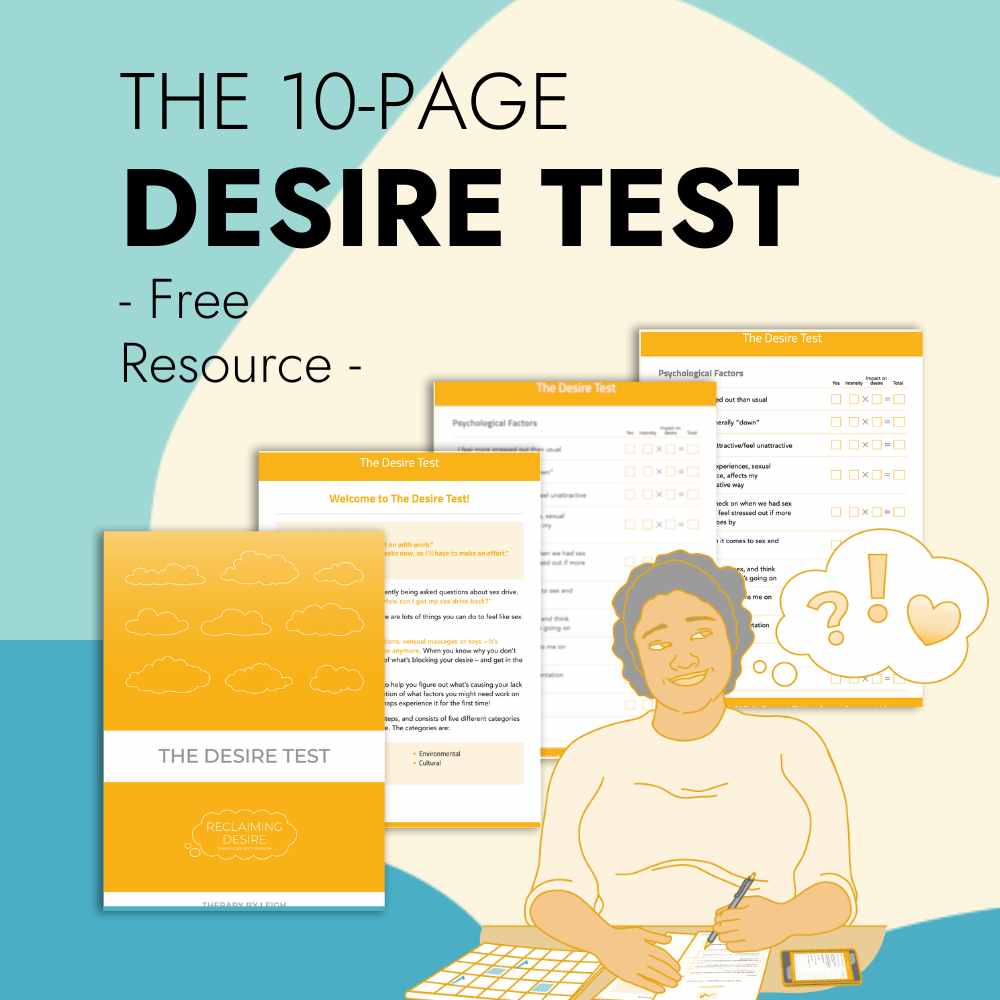
My free resource The Desire Test helps you take that first step towards an increased sex drive, by understanding your decreased desire.
Take the 10-page assessment quiz, get the answers you need to understand what’s standing in the way of your desire, and get free sex and relationship tips directly to your inbox. You can unsubscribe at any time.
Rethinking “Planning”: It’s Not Sex on Wednesday at 08.30 PM
Part of why planning sex sounds so unappealing is that we imagine it like a meeting reminder — like you’re putting “sex” in your shared calendar with a sad little Outlook reminder.
But this is only one way out of many.
Oftentimes, planning sex is simply about creating the space for sex to happen naturally, when and if you both feel like it.
It could look like:
- Scheduling a date night so you’re not both falling asleep on the sofa
- Reading erotica before bed to get your mind into a more relaxed, receptive state
- Putting on something that makes you feel good in your body
- Talking about what times of day sex feels easier for you — morning, evening, weekends
- Removing little barriers that make sex harder to access, like sorting contraception, buying lube, or making sure the bedroom feels calm and private
When we see planning in this way — not as a chore but as creating conditions for connection — it stops feeling clinical. It becomes something that makes sex easier — not forced.
The Early-Days Myth (It Wasn’t Purely Spontaneous Then Either)
In the beginning of a relationship, sex feels spontaneous. But if you think about it, everything you did back then also probably made it way easier for sex to happen in the first place. Especially compared to now, when all you discuss are the groceries and who actually emptied the dishwasher last time (it was you, right?)
When you’re dating you make sure you look and feel good, that you’re engaging emotionally with your partner. That every time you hang out is date night.
Essentially, you’re putting your best foot forward, both of you — and that often leads to sex.
It was planning — just in disguise.
If you took that same mindset now, planning might not feel like such a chore. Instead, it might feel like care and intention, and setting yourself up for success. And it might just feel nice to see your partner making that kind of effort for you again.
When you see spontaneous sex as the only “real” kind of sex, or the only satisfying kind, you’re basically at the mercy of chance.
But if you open up to the idea that planned sex can also be exciting and pleasurable, you put yourself back in the driver’s seat. You can create opportunities for sex instead of waiting around for them to magically appear.
And this is true of desire as well —you can create desire, you don’t need to wait for it to happen.
And this becomes especially important during those seasons of life when desire feels low or logistics just aren’t on your side.
If you believe planned sex is automatically a buzzkill, you’re stuck. But if you allow for the possibility that it could be satisfying, you shift from being at the whim of circumstance to being in control.
As sex researcher Justin Lehmiller puts it, planning sex can be like planning a trip to an amusement park. Mapping out what you’ll do doesn’t make it less fun — it often makes it better.
When Beliefs Don’t Match (And It Starts to Feel Like Pressure)
The study showed that when partners have different beliefs about planned sex, things can get tricky. One person might find it freeing, while the other feels trapped.
The good news is: this isn’t about right or wrong — it’s about communication.
Try talking about it:
- What does “planned” actually mean to each of you?
- What would make planning feel less like pressure and more like connection?
- When does sex feel easiest, and when does it feel impossible?
When you both get clear on what “planning” means to you and when sex is actually easier to have — it also becomes easier to find a middle ground that feels safe and good, for both of you.
When Planning Helps — and When It Backfires
Planning can work wonders if sex is generally quite a good time when you have it, but just not happening often enough. It helps couples protect time for intimacy before avoidance takes over and you’re stuck in a self-perpetuating cycle.
But if sex already feels pressured or tense — like it does for most of my clients — planning can backfire. Because when your body is already bracing for sex, putting it on the calendar doesn’t help — it just gives you something to dread even more.
In those cases, planning doesn’t solve the problem; it’s like planning for anxiety. And who wants that?
Because the truth is, your nervous system only wants to protect you. And if it’s deemed sex as bad for you, it’s not going to be on board just because you’ve planned sex.
If Sex Feels Pressured or Like a Chore — Start Somewhere Else
In my 1:1 online program Re: Desire I help those feel stressed and pressured surrounding sex, by following a specific 5-phase process I’ve designed. And it never starts with scheduling or planning sex.
The first step is working out why desire feels low. For most people, it’s not one thing, it’s a mix: stress, pain, pressure, shame, exhaustion, communication issues, even well-meaning but misplaced advice.
Maybe your partner always initiates at the worst of times. Or penetration has become painful or maybe feels like a whole bunch of nothing. Or perhaps the way your partner talks about sex after you’ve had it, leaves you feeing like you never want it agsain.
Once we’ve identified these roadblocks, we move on to Phase 2 — where we remove or adjust them. Often, these moves are temporary, to give your body a much-needed chance to relax again.
After that, we work on the (often-needed) deeper layers. Things like, rebuilding emotional connection. Learning how desire actually works (and removing belief in out-dated, unscientific ideas about libido). We address shame and shift beliefs and negative thought patterns.
We help your body and brain learn that touch doesn’t have to mean pressure. And help it to stop bracing.
And that’s when things really start to change.
Sometimes the first step looks like agreeing that only one of you initiates for a while, or planning non-sexual touch — cuddling, massages, time together with no expectation of sex. These changes might sound small, but they tell your nervous system something powerful: you’re safe again.
Try This
If you’re in a good place with your partner but want sex to happen more often, follow the research and try:
- Plan time together. It doesn’t have to be rigid — but put it in the calendar, or set aside an evening where you know being intimate is the focus, whatever that looks like. It can be kissing or making out. But being sexual together in any way – is the win.
- Creating anticipation during the day. Send a flirty text earlier in the day, tell your partner you’ve been thinking about them. Planned sex feels hotter when the build-up is there, right?
- Play with context. Planning doesn’t mean being a robot about it — it can mean choosing the playlist, setting the mood, or deciding to try that new position you’ve been curious about.
- Shift your belief. Instead of thinking: “If we plan it, it’s forced,” try: “If we plan it, we’re making sure it happens.” That tiny shift over time will change how it feels in your body. And if you want guided help doing this, check out my free exercise, Changing Sexual Beliefs.
And my tip for you if sex feels stressful or pressured is this: don’t start with planning at all — start with lowering the stakes.
Instead of focusing on sex, try planning for non-sexual touch. That could mean agreeing to cuddle without any expectation that it will lead somewhere, or giving each other a massage with the clear understanding it’s not about sex. The goal isn’t arousal — it’s safety and comfort.
When your body and brain stop bracing for sex every time touch happens, desire has more room to come back on its own.
The Takeaway
Just as the research shows, spontaneous sex isn’t automatically better — and planned sex isn’t automatically worse. What matters is what it means to you, and how intentionally you and your partner make space for it.
For couples who are doing okay but want more connection, planning can protect intimacy and help you find your way back to each other. For couples where sex feels heavy or stressful, the first step is gentler — lowering the stakes, removing pressure, and building safety again.
Either way, you’re not broken if sex doesn’t “just happen.” You’re human. And desire can be accessed again, but some level of intention needs to be there.
If you’ve been struggling with this and feel like you’ve tried everything and none of it is working – this is exactly what I help clients with inside Re:Desire — my 1:1 online program for people who feel stressed, pressured, or disconnected when it comes to sex.
It’s not about forcing desire back and having lots of sex you don’t want. It’s about understanding why it changed — and learning how to access it again. Because it’s there, you just can’t feel it anymore.
Zero sex drive?
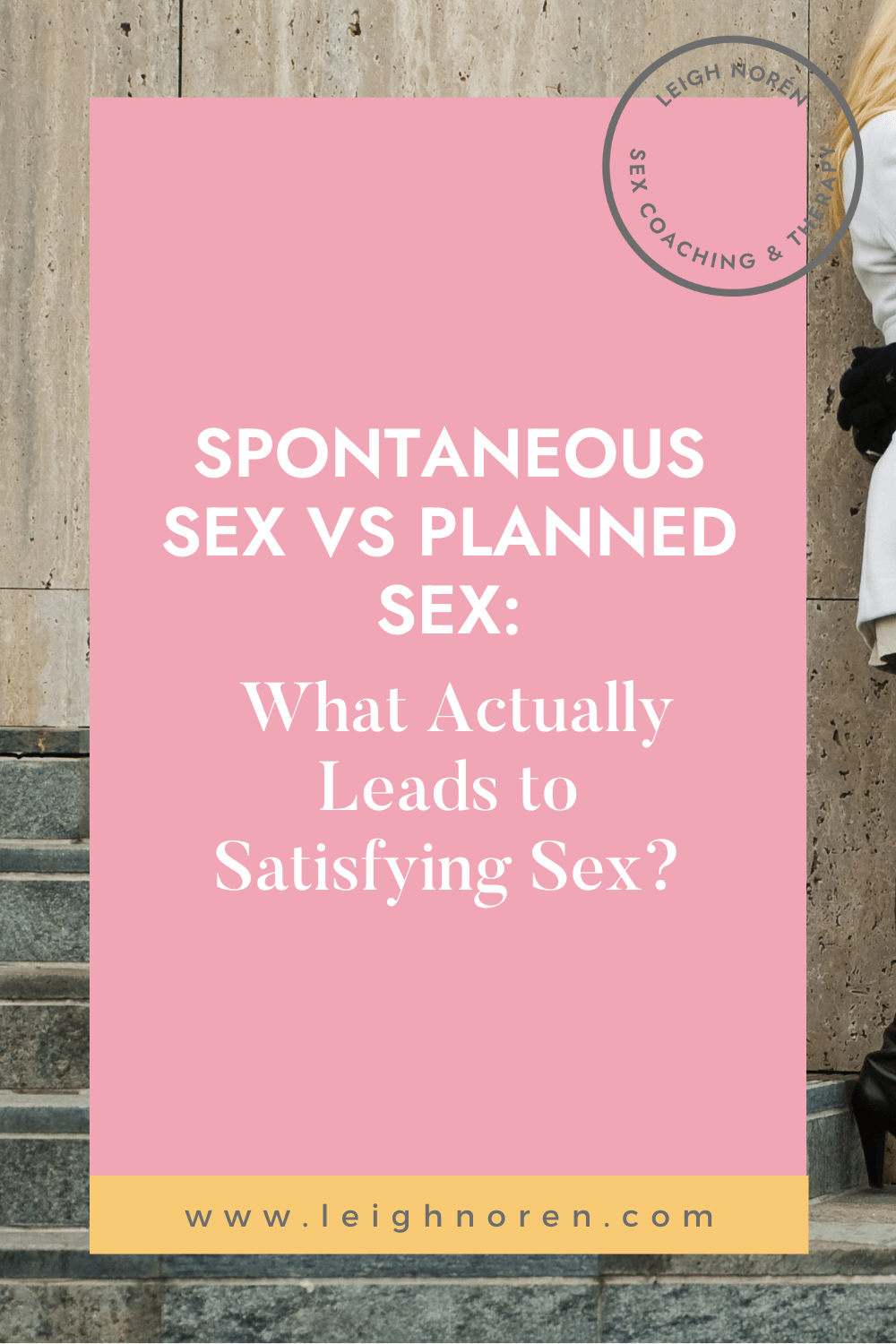
You’re not alone! Download the 10-page Desire Test to find out why your desire for sex is gone (and what to do about it).
Questions based on a variety of factors proven to negatively affect desire

Find out which factors are responsible for your low or non-existent sex drive
Get instant access to expert advice, delivered directly to your inbox when you download The Desire Test. Unsubscribe anytime.
WANT TO KNOW MORE ABOUT THE DESIRE TEST?


With 9 years of experience as a sex therapist and coach - Leigh helps her clients create stress-free, shame-free, pressure-free sex lives, through her unique combination of sexological science, & psychotherapeutic & coaching tools.